NumMatch: Number Logic Puzzles
- 4.5
- Rating
- 10.00M
- Installs
- Free
- Price
 Analysis by App-foxy
I picked up NumMatch: Number Logic Puzzles expecting a quick number game, and that is exactly where its appeal begins. It is a free board game from BRAINWORKS PUBLISHING PTE. LTD. built around arranging and merging numbers, with a simple enough premise to understand almost immediately. The first few rounds feel light, tidy, and pleasantly absorbing rather than demanding.
That simplicity is also the main question behind the game: does it remain useful once the first-week curiosity disappears? In my experience, it can earn a regular place on a phone, but only for players who enjoy short, self-contained logic sessions. It is not a substitute for a deep strategy board game, a social match, or a story-driven puzzle adventure. Its lasting value comes from how easily it fits into spare moments, not from constant novelty.
Why the first week feels so approachable
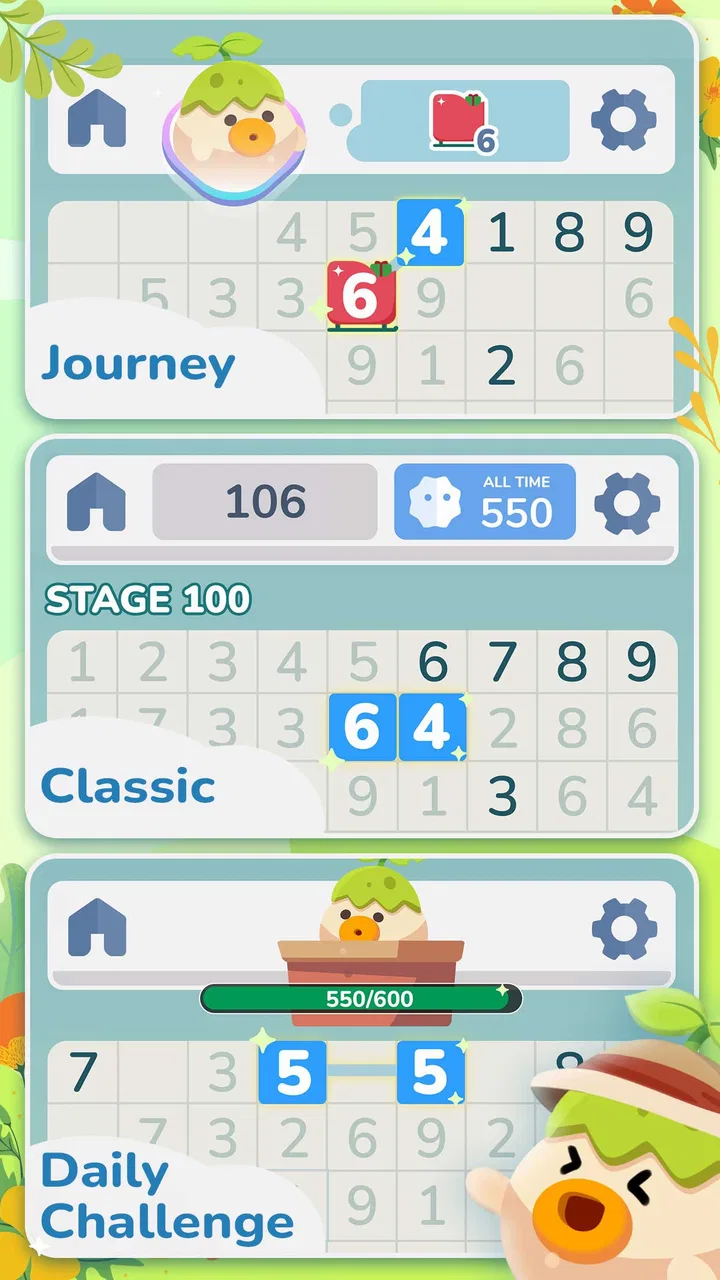
The opening experience is refreshingly direct. The store summary describes the central idea as choosing between tens or pairs and merging numbers, and the game does not need a long explanation before I can start thinking about my next move. That low entry barrier matters on mobile: I can open it during a short break, understand the board quickly, and begin making decisions without first learning a complicated rule set.
You May Also Like

 Pandora - Music & Podcasts
Pandora’s Music Is Easy to Start, but Harder to Recover
Pandora’s strength is its low-effort path from a seed to a station. Its weak spot is how much confidence it asks you to place in connection, setup, and quiet recovery.

 8 Ball Pool
 Is Built on Rivalries, Rematches, and Routine
A close look at the rivalries, rematches, shared routines, and unanswered safety questions that turn a quick pool match into a persistent mobile community.

 Samsung Music
’s Quiet Strength Is Playing What You Already Own
Its reach comes less from spectacle than from dependable access to a personal library. That simplicity is both the app’s strongest retention engine and its ceiling.

 AccuWeather: Weather Radar
AccuWeather Review: A Quick, Clear Forecast for Everyday Decisions
For everyday plans, the best forecast is the one you can understand quickly. AccuWeather makes rain timing, radar, and local conditions easy to act on, with a few trade-offs.

 Hill Climb Racing
Why Hill Climb Racing Still Turns Crashes Into One More Run
A tiny car, a bumpy hill and one more upgrade: Hill Climb Racing keeps resurfacing because its simple chaos makes every near-miss feel personal.

 AliExpress - Shopping App
AliExpress Makes Global Shopping Feel Personal, but Shoppers Bear the Risk
AliExpress turns a global marketplace into a pocket-sized discovery engine. Its reach is useful, its shopping loop compelling, and its trade-offs easy to miss.
More From Our News Desk
View All News


The board format gives each move a small amount of weight. A number may look useful immediately, but combining it too soon can leave an awkward arrangement later. I found myself switching between quick opportunities and safer positioning, which gives the game more thought than its plain presentation initially suggests. The best early sessions are not about rushing; they are about noticing how one merge changes the options around it.
That makes it suitable for people who want compact logic puzzles rather than reflex-heavy play. I would recommend it to someone who enjoys number patterns, matching games, and calm decision-making. It also works for a player who wants something that can be paused mentally between everyday tasks. A short session does not require the commitment of a traditional board game, and there is no need to coordinate with another person before playing.
A realistic use case is a commute or a waiting room. I can play a few turns, put the phone away when my appointment is called, and return later without having to remember a plot or rebuild a complicated strategy from scratch. That convenience is one of the strongest reasons to try it. The game turns small gaps in the day into a focused activity instead of another round of passive scrolling.
The age rating is Everyone, which matches the accessible number-based presentation. I would still distinguish “easy to start” from “always easy to solve.” The rules are friendly, but keeping a board healthy requires planning. Younger players may enjoy the matching idea, while adults who like mental warm-ups may appreciate the need to hold several possible combinations in mind.
The first-week weakness is equally clear: the basic loop can become familiar quickly. Once I understood the useful habits—protecting open space, avoiding impulsive combinations, and looking beyond the immediate merge—the surprise of the opening sessions faded. The game remains pleasant, but it does not constantly reinvent itself in the way a larger puzzle collection might.
That distinction is important when comparing it with usual alternatives. A classic Sudoku app offers a more structured deduction process, while a word puzzle gives variety through vocabulary. A match-three game usually emphasizes quick visual reactions and cascading rewards. NumMatch sits between these styles: it is more deliberate than a reflex game, but less formally deductive than Sudoku. Its identity comes from managing number combinations on a limited board.
Small decisions that improve the opening sessions
My most useful adjustment was to stop treating every available merge as an automatic reward. A combination may clear an immediate problem while creating a worse shape for the next several turns. I started checking the surrounding spaces first and asking whether the move preserved multiple future choices. That simple pause made the game feel more strategic without making it slower.
I also found it helpful to separate “progress” from “movement.” A board can look active because numbers are constantly changing, yet still be drifting toward a dead end. When I focused on preserving flexibility instead of chasing the largest visible result, sessions became more consistent. This is a practical tip for anyone who feels stuck early: favor moves that keep the board workable, even when they appear less impressive.
Another useful habit is to play in short blocks rather than forcing a long run. When I continued after my attention had dropped, I made careless choices and blamed the puzzle for becoming repetitive. Stopping after a focused session made the next opening feel cleaner. This is not a game that rewards marathon play as naturally as it rewards a few attentive minutes.
What remains after the novelty fades
The month-to-month question is whether the core loop can support a habit. For me, the answer is yes, but in a limited role. I can imagine returning several times a week for a brief mental reset, especially when I want a quiet game without a large download of ideas to absorb. The appeal comes from repeatability: the same rules allow me to improve my judgment rather than merely consume new content.
Its current version is 1.36.1, and the game has reached over ten million installs with an average rating of 4.5 from around sixty-one thousand ratings. Those figures suggest that the format has found a substantial audience, but they do not guarantee that every player will find enough variety for long-term use. In my view, the numbers are best read as evidence that the basic concept is broadly approachable, not proof that it replaces every other puzzle game.
The free entry point helps with experimentation. I can install it, play enough to understand the rhythm, and decide whether the board-based number loop suits me without paying upfront. In-app purchases range from $0.99 to $9.99 per item. That makes it worth checking the purchase flow carefully before spending, particularly if I am trying to keep a casual game completely free.
For recurring value, the important question is not whether I enjoy the first session but whether I still have a reason to open it after several weeks. I do when I use it as a small routine: a few puzzles with coffee, a short break between tasks, or a low-pressure way to settle my attention. I do not when I expect a steady stream of new mechanics, a strong competitive scene, or a large collection of distinct puzzle types.
This is where it differs from broader board-game apps. A digital collection with chess, checkers, cards, and strategy games offers more variety but asks me to choose a different activity each time. NumMatch offers less breadth and a more consistent mental texture. That narrowness is a strength for habit-building because I know what kind of session I am getting, but it is a weakness if I need constant change to stay interested.
Players who enjoy measurable personal improvement may find a satisfying reason to return, even without a social component. Each session gives me feedback about my own planning: did I preserve space, did I recognize a better merge, and did I react too quickly? The progress is internal rather than theatrical. If I need rankings, direct opponents, or collaborative play to maintain motivation, this will probably feel too solitary.
How to make the routine last
I would keep the game in a specific slot rather than opening it whenever I am bored. A defined routine prevents it from becoming an endless filler activity and gives each session a purpose. For example, I might play until my attention starts slipping, then stop instead of chasing one more successful combination. That approach keeps the game associated with concentration rather than fatigue.
I would also alternate between two mindsets. On some days, I would play slowly and prioritize board health. On others, I would accept more risk and see how far an aggressive sequence can go. This creates a small amount of self-directed variety without pretending that the game has a completely different mode. The trade-off is clear: cautious play is steadier, while risky play is more exciting but more likely to end badly.
A further tip is to use the game as a transition activity, not as a replacement for a full break. If I am mentally overloaded, a short number puzzle can help me focus on one thing. If I am already tired from extended screen use, another screen may not refresh me at all. In that situation, a walk or a non-digital board game would be the better choice.
Where the maintenance burden appears
NumMatch is easy to maintain from a player’s perspective because the rules do not demand regular study. I do not need to memorize a large card set, follow a changing meta, or learn a new character roster. That makes returning after a gap comfortable. I can forget the game for a while and come back without feeling punished for missing a schedule.
The burden is instead placed on attention. The board may be simple to read, but good decisions require patience. If I play while distracted, I tend to choose the most obvious merge and lose the flexibility that would have helped later. The game therefore asks for a modest amount of mental maintenance: not daily commitment, but enough focus to avoid turning every session into automatic tapping.
Its compact design also means the game can become part of a phone’s background rather than its main attraction. That is positive for storage and time, but it limits the sense of occasion. A player looking for a substantial evening activity may finish a session and feel that it was pleasant but slight. I would keep it alongside a deeper puzzle or strategy title, not rely on it as my only game.
Another practical consideration is spending discipline. Because the game is free to start and includes optional items priced from $0.99 to $9.99, I would decide in advance whether purchases fit my habits. The strongest reason to install it is the core play, so I would first test whether that loop remains enjoyable without treating optional purchases as part of the basic value calculation.
The developer is BRAINWORKS PUBLISHING PTE. LTD., and the game was released on January 4, 2024. It supports Android 7.0 and later, which makes it accessible to many older devices. For someone using an older Android phone, that compatibility can matter more than flashy presentation. I would still judge the experience on the specific device, especially if smooth input and clear board visibility are important to me.
What can cause fatigue over time
The largest source of fatigue is repetition in the central action. Merging numbers is satisfying when I am solving a fresh arrangement, but the same decision pattern can feel routine after many sessions. The game’s strength is that it does one thing clearly; its limitation is that the same clarity can expose how narrow the loop is.
A second source is the tension between short play and unfinished thinking. A quick session is convenient, but I may stop just as I begin seeing a better long-term plan. Returning later restores the board, yet the interruption can make the experience feel fragmented. This is less of a problem for casual players than for people who want a continuous strategic arc.
A third issue is that personal improvement can plateau. At first, I notice obvious mistakes and become better at leaving room for future moves. Later, gains become smaller and less visible. That can be satisfying for a patient player, but discouraging for someone who expects each week to bring a clear new skill. The game works best when I value refinement rather than constant escalation.
Compared with Sudoku, NumMatch gives me more immediate movement and less formal deduction. Compared with match-three games, it asks for more restraint and offers less rapid spectacle. Compared with physical number tiles, it is more convenient but less social and tactile. Those trade-offs make the choice straightforward: pick this game for portable, quiet number management; choose another option when conversation, variety, or rigorous logic is the priority.
I would also skip it if I dislike games where one careless decision can spoil an otherwise promising arrangement. Some players find that tension motivating, while others experience it as needless friction. Likewise, anyone seeking a narrative, real-time competition, or a large set of unrelated puzzles will likely outgrow it quickly.
My long-term verdict
After the novelty fades, I still see a legitimate place for NumMatch, but a specific one. It earns space as a lightweight number puzzle for short, focused sessions, not as an all-purpose board-game platform. I like that the rules are quick to grasp, the board rewards planning, and the free starting point makes trying it low risk.
Its lasting value depends on accepting repetition as part of the appeal. I return because the familiar structure lets me practice better choices, not because every visit feels dramatically different. That makes it a good companion for commutes, waiting periods, and brief mental resets. It is less convincing as a main game for long evenings or as a replacement for social tabletop play.
The honest recommendation is simple: install it if you enjoy number combinations and want a calm game that can fit around real life. Give it a week, then notice whether you are returning deliberately or merely tapping it out of habit. If you still enjoy protecting space and planning merges, it has enough recurring value to stay. If the board begins to feel like the same task every time, moving to Sudoku, a varied puzzle collection, or a physical board game will probably serve you better.
For me, NumMatch: Number Logic Puzzles passes the long-term test with a qualification: it is a dependable small habit, not an endlessly expanding hobby. That is a fair result for a free board game whose best quality is its ability to turn a few spare minutes into a focused number challenge. Its real strength is repeatable simplicity with just enough planning to keep familiar rounds meaningful.
FAQs for NumMatch: Number Logic Puzzles
01What is NumMatch: Number Logic Puzzles?
NumMatch: Number Logic Puzzles is a mobile game designed to enhance your numerical reasoning skills through engaging puzzles. The game offers various levels of difficulty, challenging players to solve number-based logic puzzles. It's available for both Android and iOS, providing a fun and educational experience for all ages.
02How does the gameplay work in NumMatch?
In NumMatch, players are presented with grids filled with numbers. The objective is to eliminate numbers by matching them according to specific rules, such as summing to a particular value or matching identical numbers. As you progress, the puzzles become more challenging, requiring strategic thinking and planning.
03Is NumMatch suitable for all age groups?
Yes, NumMatch is designed to be accessible to players of all ages. The initial levels are relatively simple, making it easy for younger players to grasp the concept. However, as the difficulty increases, it provides a stimulating challenge for adults as well, making it a great family-friendly app.
04Does NumMatch require an internet connection to play?
NumMatch can be played offline, which makes it convenient for users who may not always have access to the internet. However, some features, such as leaderboard updates or downloading additional content, may require an internet connection. This ensures you can enjoy the game anytime, anywhere.
05Are there in-app purchases in NumMatch?
NumMatch offers in-app purchases that enhance the gaming experience, such as additional hints or unlocking new puzzle packs. While these purchases are optional, they can help players who wish to progress faster or need extra assistance in solving difficult puzzles. The game is fully functional without purchases, ensuring a fair experience for all users.
Pros
- Engaging puzzles enhance logical thinking.
- User-friendly interface with intuitive controls.
- Variety of levels keeps gameplay fresh.
- Offline mode available for on-the-go play.
- Regular updates introduce new challenges.
Cons
- Ads can be intrusive during gameplay.
- Limited hints may frustrate some users.
- No multiplayer or social features.
- In-app purchases can be pricey.
- Some puzzles may feel repetitive.

NumMatch: Number Logic Puzzles
Gallery